Old Norse name
Týr
Norse god
Týr is a god of the Æsir with a relatively small body of surviving stories. Gylfaginning describes him as bold and courageous, then centres his portrait on the hand he places in Fenrir’s mouth so that the wolf will agree to test Gleipnir.
Týr’s connections with law, oaths and the assembly are plausible scholarly interpretations, informed by Germanic comparisons and the Roman inscription to Mars Thingsus. They should not, however, be presented as explicit teachings of the Eddas.
Snorri presents Týr among the Æsir and stresses his boldness. He adds that a courageous man may be called Týr-valiant, but the surviving sources do not provide a long series of adventures comparable to Thor’s.
This scarcity means that gaps should not be filled with a reconstructed biography. The lost hand, the visit to Hymir, a runic formula and the final battle form the main narrative evidence used here.
In Gylfaginning, Fenrir grows up among the gods, and only Týr dares to feed him. When the Æsir want to test Gleipnir, the wolf suspects a trap and demands that a god place a hand in his mouth as a pledge.
They all know that Fenrir will not be released if he cannot break the bond. Týr nevertheless agrees. When the wolf realises the deception, he bites off the hand at the place thereafter called the wolf’s joint.
Týr’s act resembles a bodily pledge, but the text does not formally call him the universal guardian of oaths. Above all, it shows him personally bearing the consequence of a collective, deceptive decision.
The gods laugh when Fenrir remains bound, except for Týr, who has just lost his hand. This contrast gives the passage its moral force without requiring a legal doctrine absent from the story.
In Hymiskviða, stanzas 4–9, Týr accompanies Thor to Hymir’s home to obtain a cauldron for the gods’ feast. Stanza 5 calls Hymir his father; stanza 8 mentions his grandmother with nine hundred heads.
Skáldskaparmál, chapter IX in Brodeur’s translation, instead includes ‘son of Odin’ among the names for Týr. This parentage comes from that passage, not from the portrait of Týr in Gylfaginning.
Sigrdrífumál, stanza 6 in Bellows’s translation, recommends victory runes on the sword and calls for Týr to be named twice. The passage connects his name with the weapon and victory.
It does not, however, make Týr the sole ‘god of honourable war’. Several Norse gods are associated with battle, and exclusive categories modelled on Greek and Roman religion poorly reflect the Scandinavian evidence.
In Gylfaginning, chapter LI in Brodeur’s translation, Týr faces Garmr, the dog bound before Gnipahellir. The god and the creature kill one another.
Völuspá has Garmr bark several times but does not name Týr in those stanzas. The explicit duel therefore belongs to Snorri’s prose narrative.

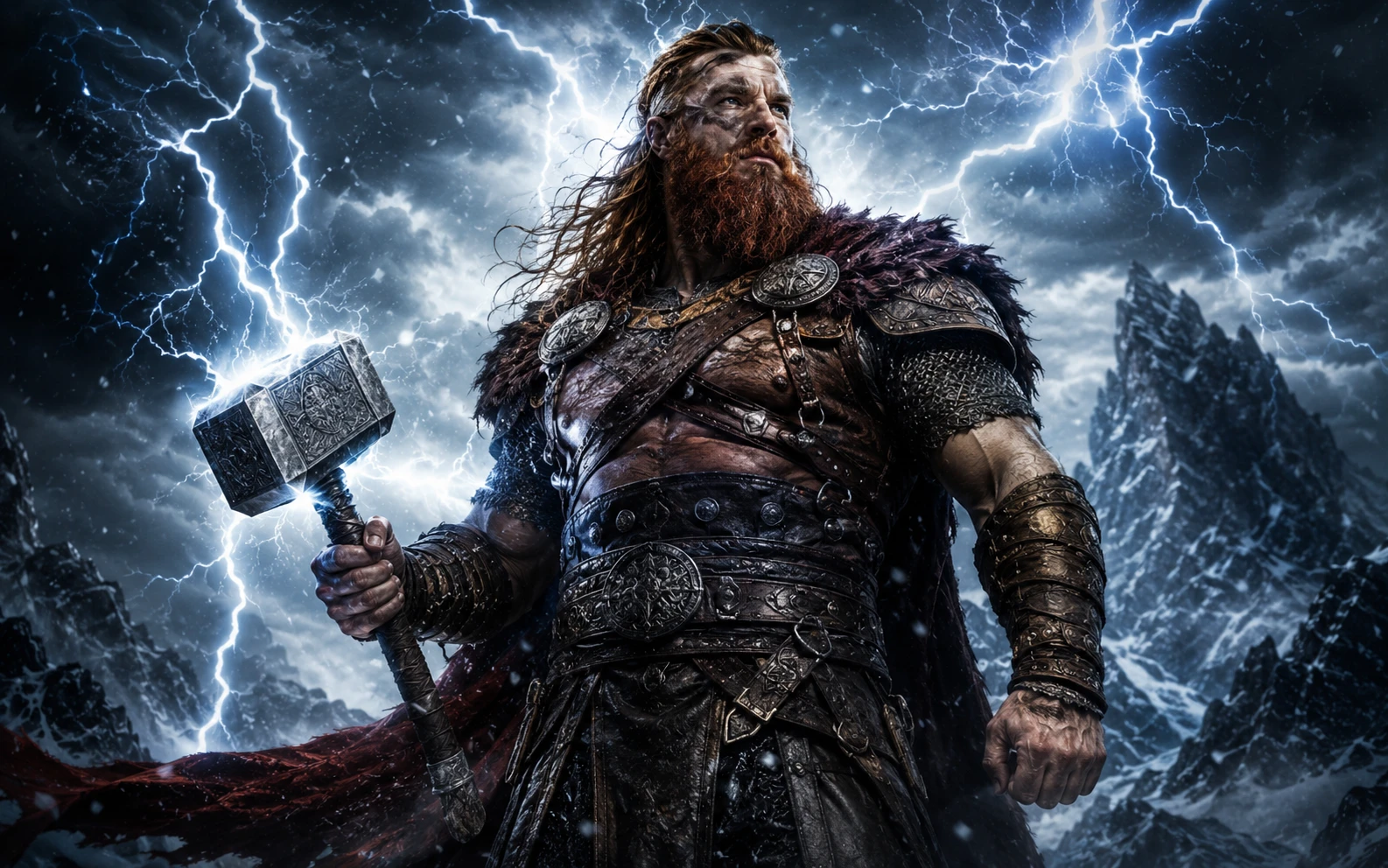

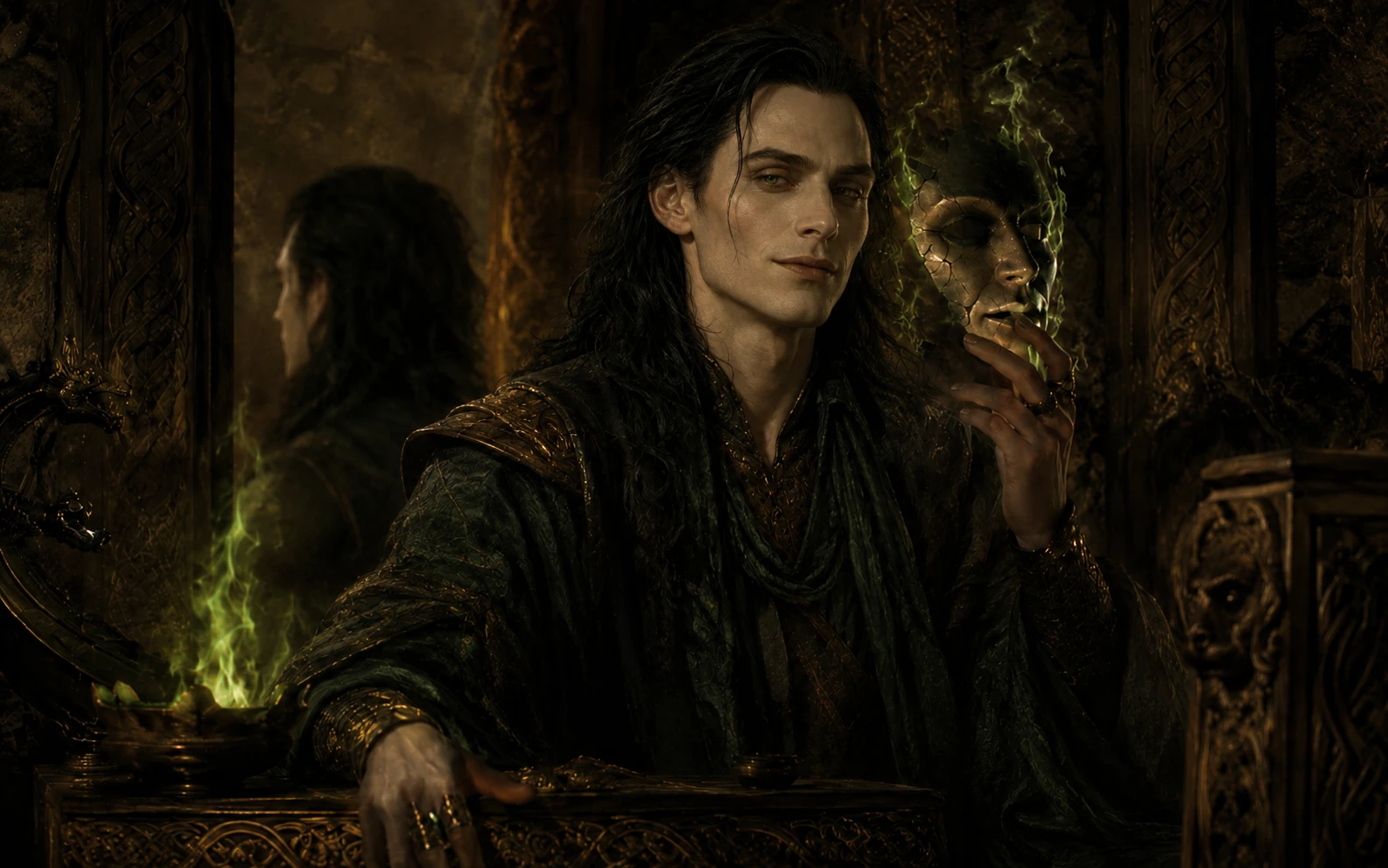
Hymiskviða gives Hymir as Týr’s father, whereas the Prose Edda lists him among Odin’s sons.
The association with oaths, law and the þing rests on comparison and inscriptions; the exact links between the assembly and pre-Christian religion remain debated.
Before the binding, he is the only god who dares regularly approach the wolf to feed him.
He places his hand in Fenrir’s mouth and loses it when Gleipnir holds.
Hymiskviða has him accompany Thor to the giant it names as his father.
In Snorri, Týr and the dog of Gnipahellir kill each other at Ragnarök.
His portrait, right hand lost to Fenrir and fight with Garmr. English translation: Arthur Gilchrist Brodeur, 1916. The reference supports these specific points.
Týr described as Odin’s son; his mother is not named. English translation: Arthur Gilchrist Brodeur, 1916. The reference supports these specific points.
Alternative parentage: Hymir and an unnamed mother. English translation: Henry Adams Bellows, 1923 (numbering follows this edition). The reference supports these specific points.
Victory runes and the invocation of Týr. English translation: Henry Adams Bellows, 1923 (numbering follows this edition). The reference supports these specific points.
The lost hand and Loki’s accusations, presented as part of an exchange of insults. English translation: Henry Adams Bellows, 1923 (numbering follows this edition). The reference supports these specific points.
A study of possible connections between the mythological assembly and religion, stressing the uncertainties of this reconstruction.
Explore related figures, places and stories. Pages available only in French are labelled.
Compare the accounts that name Odin or Hymir as his father.
Týr’s hand offers a powerful image of a pledge and a cost personally borne, but it does not automatically turn every modern theory about Germanic law into an attested Eddic role.
Keeping narrative, comparison and hypothesis separate preserves the figure’s force without overstating a relatively brief body of medieval evidence.