Greek name
Selene (Σελήνη)
Goddess of the moon
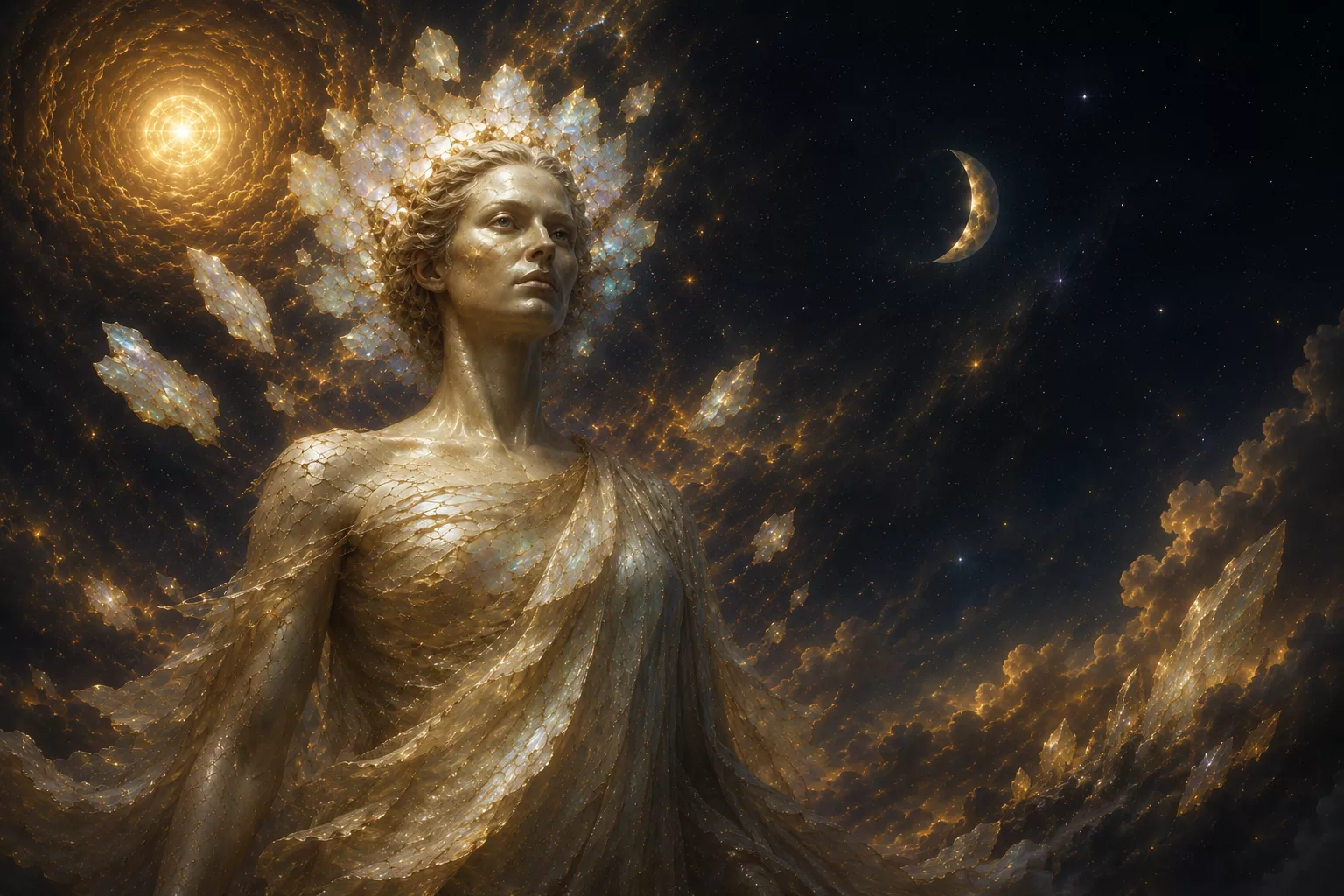
Selene personifies the moon, carrying it across the night sky in a silver chariot.
The sister of Helios and Eos belongs to a family of celestial powers whose movements give the world its daily and nightly rhythms.
Selene personifies the moon on its nightly journey. She brings a softer light than Helios, but one that returns just as regularly.
Her lunar chariot marks the passage of time at night: phases, cycles, meetings and periods of waiting become visible through her.
The story of Endymion connects Selene with unchanging beauty, sleep and suspended desire. The goddess loves a mortal who partly escapes the ordinary passage of time.
Her connections with Nyx, Eos, Helios and Artemis reveal different Greek ways of understanding night, light and the cycles of the heavens.
Selene personifies the visible moon. Artemis and Hecate sometimes take on lunar aspects, but these associations should not obscure Selene's distinct identity as a celestial goddess.
Versions of Endymion's story differ: he may receive eternal sleep, remain forever young or become the object of a lunar love suspended outside ordinary time.
Selene crosses the sky in her silver chariot. The story gives a divine face to the moon's regular movement.
Selene loves Endymion, who lies in an eternal or prolonged sleep, depending on the version. The story brings together desire, beauty and stillness.
Through her phases, Selene marks a calendar distinct from the sun's. She becomes a point of reference for nights, rituals and recurring cycles.
Hyperion and Theia; Helios, Selene and Eos; the offspring of Eos and Astraeus. English translation: H. G. Evelyn-White, 1914. This reference supports those specific points.
A specialist collection of ancient passages, genealogies, variants, iconography and references to source texts.
A French overview to use as a starting point for names, variants, cultural context and bibliography.
Explore related figures, places and stories. Pages available only in French are labelled.
Find Hyperion, Theia, Helios and Eos in the Greek family tree.
Selene completes the Greek celestial cycle by giving the night a bright and regularly returning presence.
Read her story alongside those of Nyx, Eos, Helios and Artemis to explore the different forms of light.