Greek name
Helios (Ἥλιος)
God of the sun
Helios personifies the sun itself, before Apollo becomes widely associated with it. Each day, he crosses the sky in his radiant chariot.
His gaze takes in the world from above, making him a formidable witness in several stories: he can see what gods and mortals would rather keep hidden.
Helios personifies the sun in its daily course. He is more than a source of light: his regular movement makes the world visible.
His position high in the sky also makes him a witness. Stories use his gaze to reveal what was meant to remain hidden.
In many traditions, Helios remains distinct from Apollo. He belongs to an older divine generation, connected with the Titans and the cosmic workings of the day.
His connections with Eos, Selene, Apollo and Zeus help distinguish physical light, divine light, celestial rhythms and cosmic sovereignty.
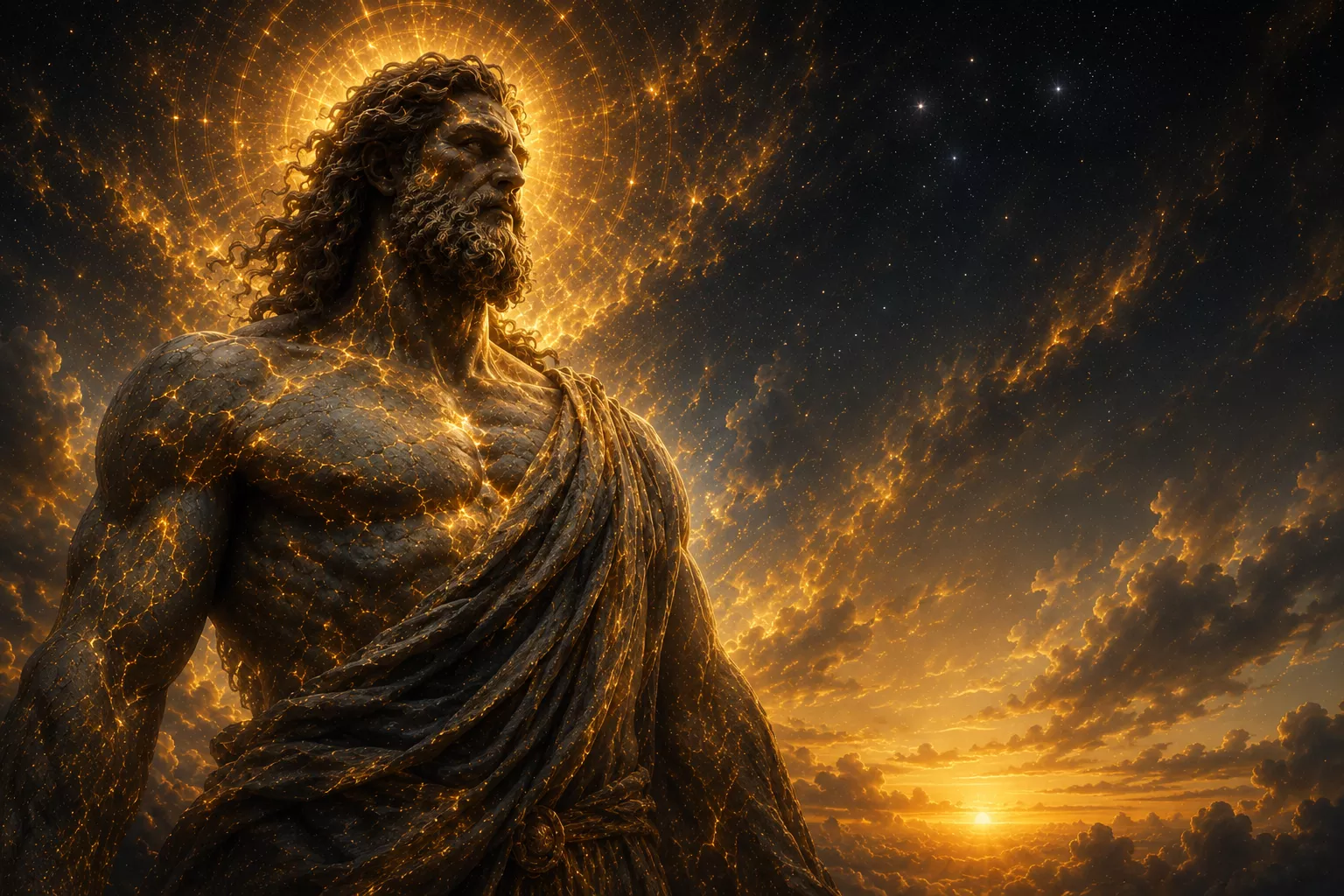
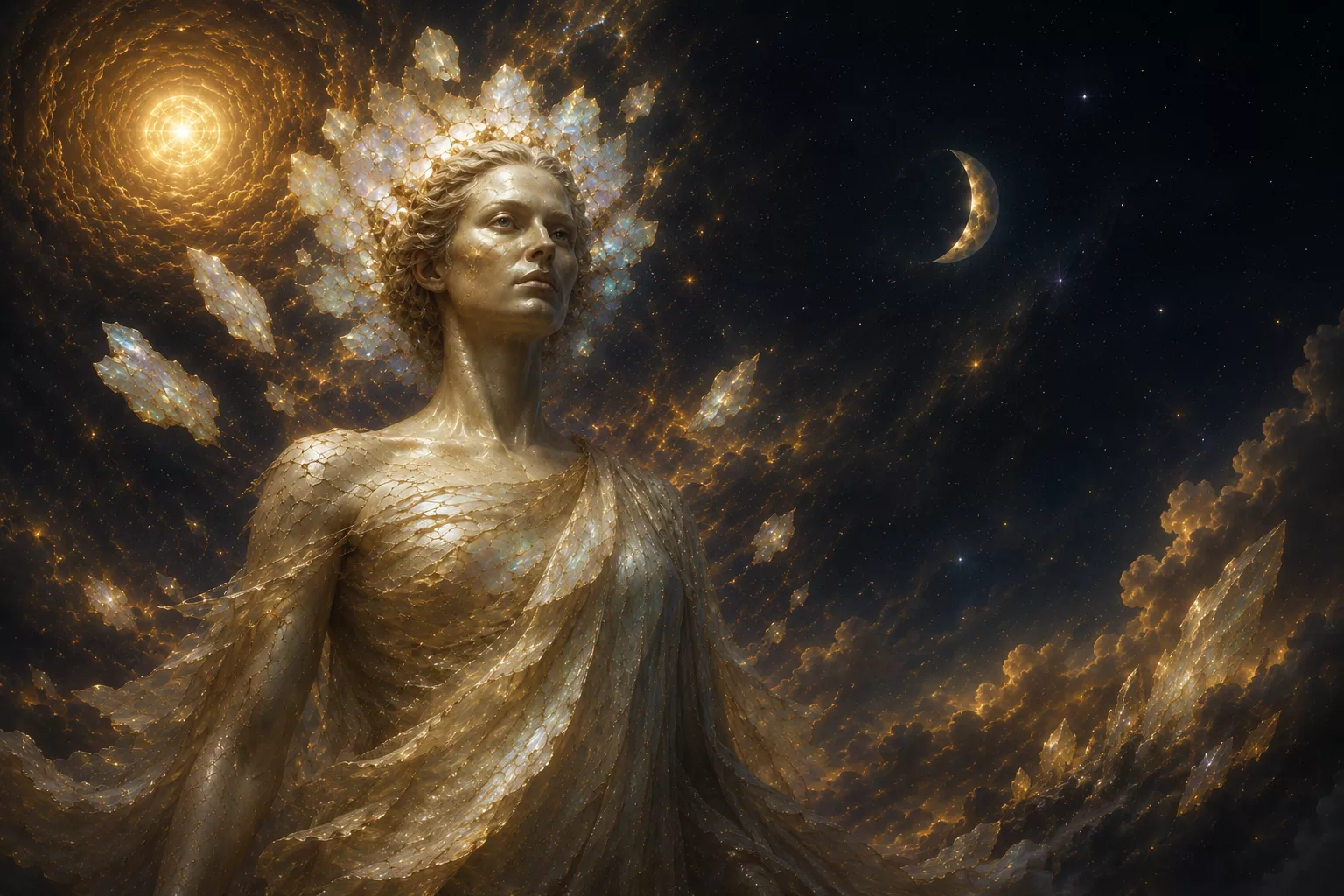
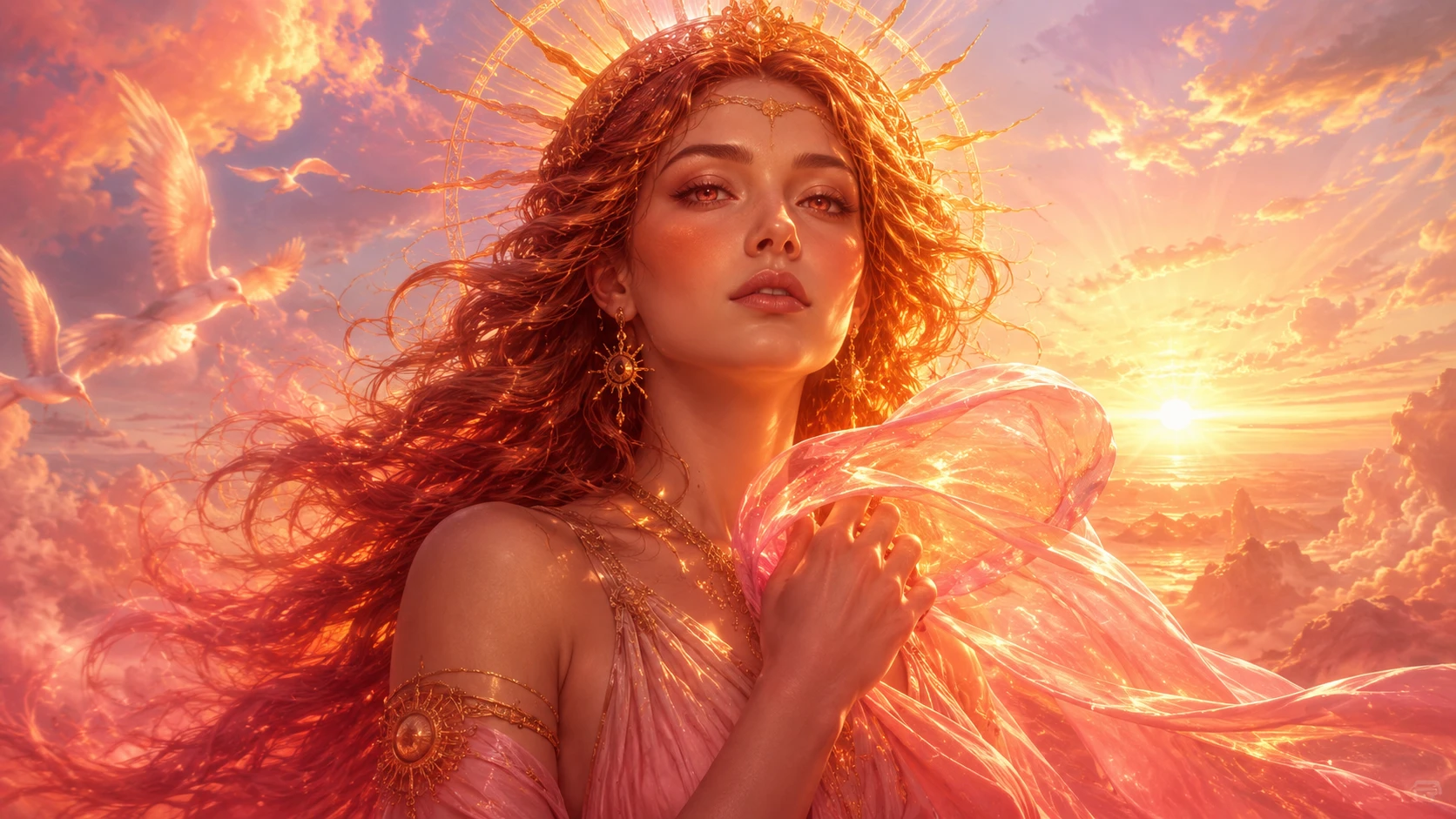

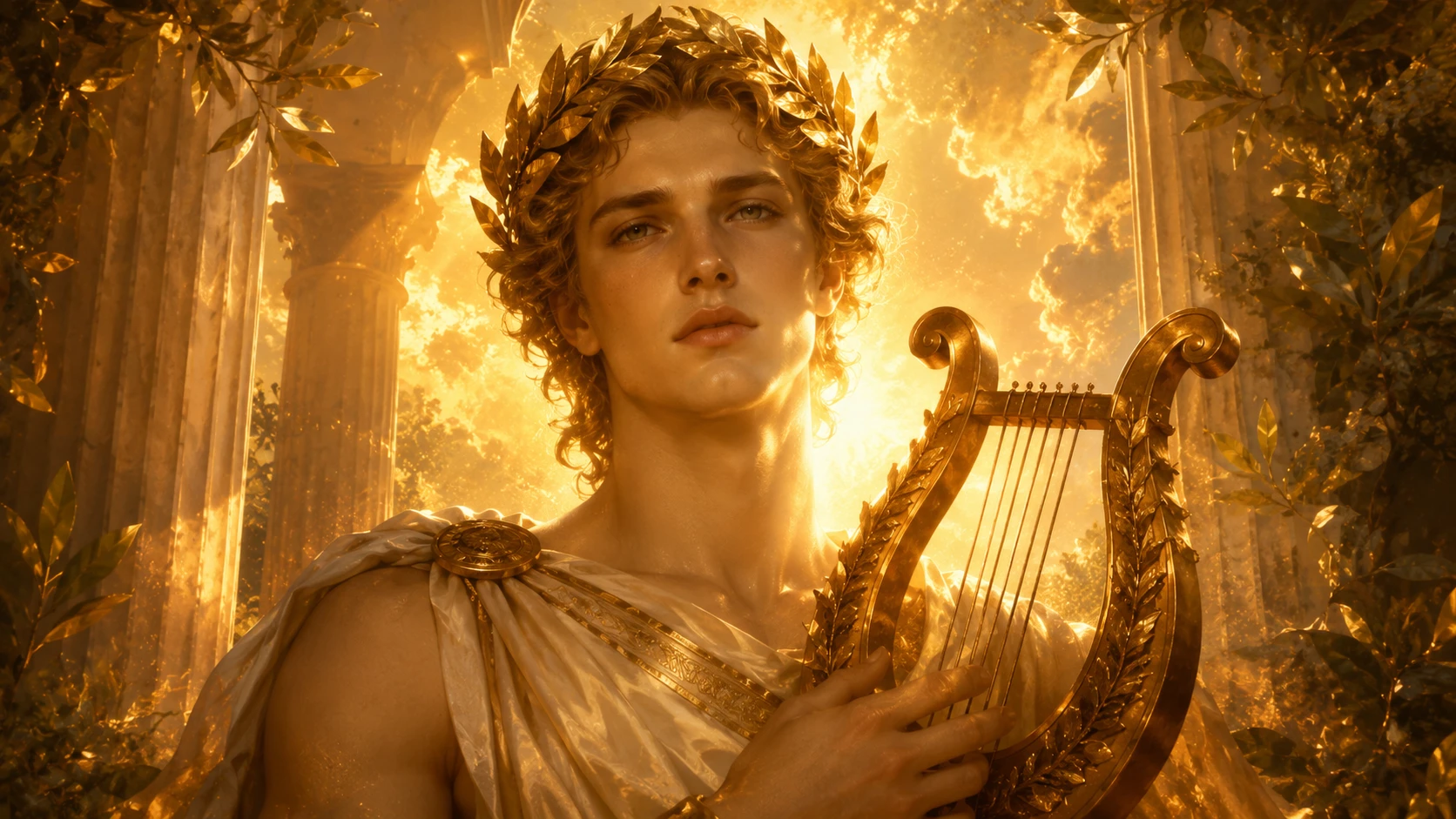

Helios personifies the visible sun in Greek tradition. Apollo's association with the sun becomes stronger later, but Helios retains his own stories and family tree.
Because he sees everything from his chariot, Helios can reveal what others do not know. This role explains his importance in stories involving Demeter, Aphrodite and oaths.
Each day, Helios drives his chariot across the sky. This image gives the sun's cycle the form of a story.
Helios reveals the affair of Ares and Aphrodite to Hephaestus. His light becomes a power that uncovers secrets.
Phaethon wants to drive his father's chariot and almost sets the world ablaze. The story shows that keeping the sun on its course requires divine control.
Circe's parentage. English translation by A. T. Murray (1919). This reference supports that specific family connection.
Hyperion and Theia; Helios, Selene and Eos; the offspring of Eos and Astraeus. English translation: H. G. Evelyn-White, 1914. This reference supports those specific points.
A specialist collection of ancient passages, genealogies, variants, iconography and references to source texts.
A French overview to use as a starting point for names, variants, cultural context and bibliography.
Explore related figures, places and stories. Pages available only in French are labelled.
Explore his celestial family and descendants in the Greek family tree.
Helios helps distinguish different forms of light in the pantheon: the physical sun, dawn, the moon and Apollo's radiance.
His profile completes a celestial cycle alongside Eos, Selene, Apollo and Zeus.