Greek name
Hecate (Ἑκάτη)
Goddess of crossroads
Hecate watches over crossroads, thresholds, the night and magical practices. Her presence marks the places where different worlds meet.
Associated with torches, dogs and night-time apparitions, she accompanies uncertain crossings rather than belonging to one clearly defined realm.
Hecate belongs to crossroads, magic, nocturnal apparitions and places where familiar boundaries become uncertain. She accompanies the moment when the way ahead is not yet clear.
Her power is not only dark: she guides, protects and lights the threshold. Yet that protection can remain unsettling, because it brings people close to the unseen.
Hecate crosses realms rather than remaining within one. She helps Demeter search for Persephone and becomes an important presence at the boundaries of the underworld.
Her connections with Demeter, Persephone, Hades and Hermes bring together quests, descents, thresholds, messages and nocturnal rites.
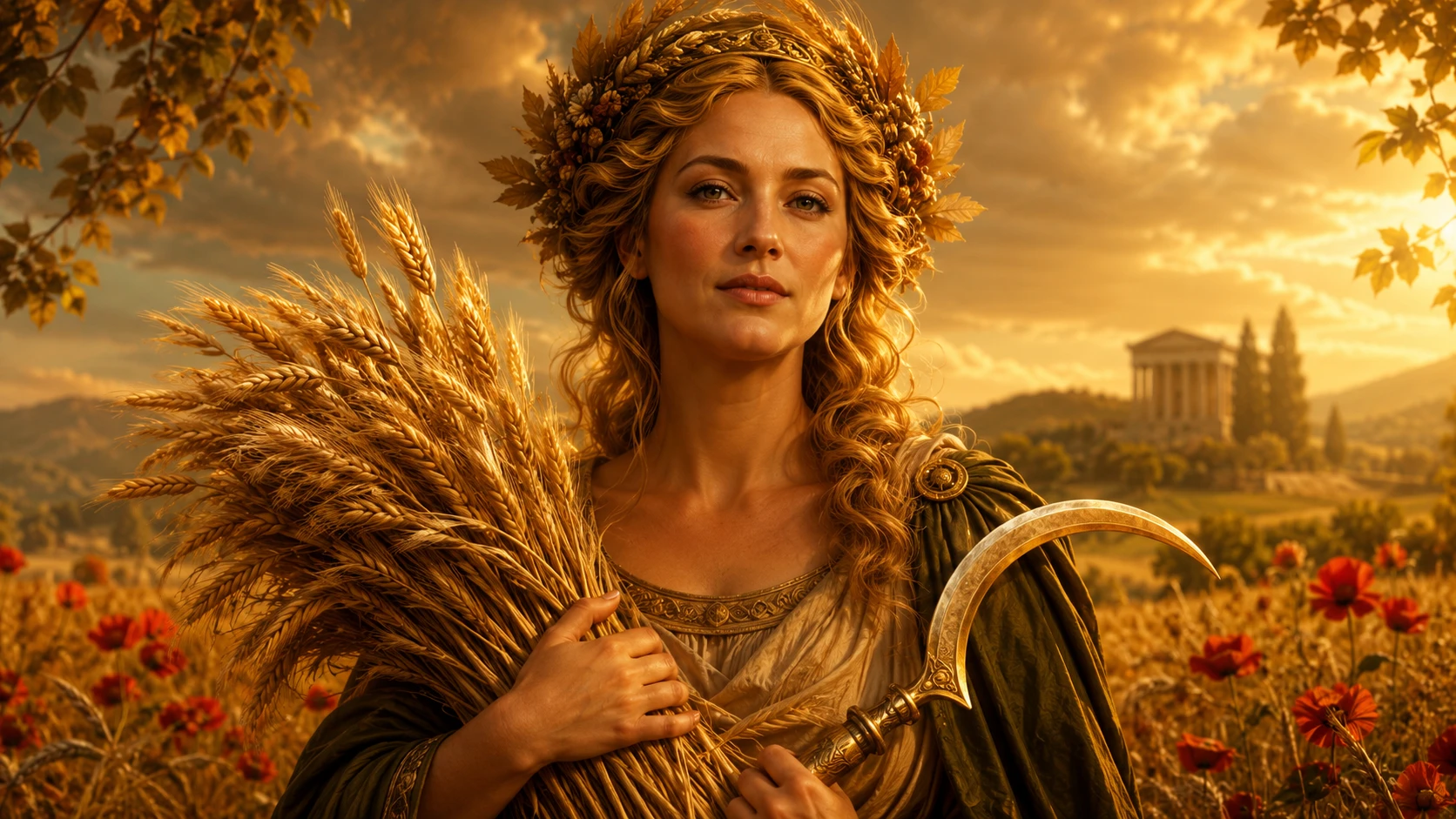


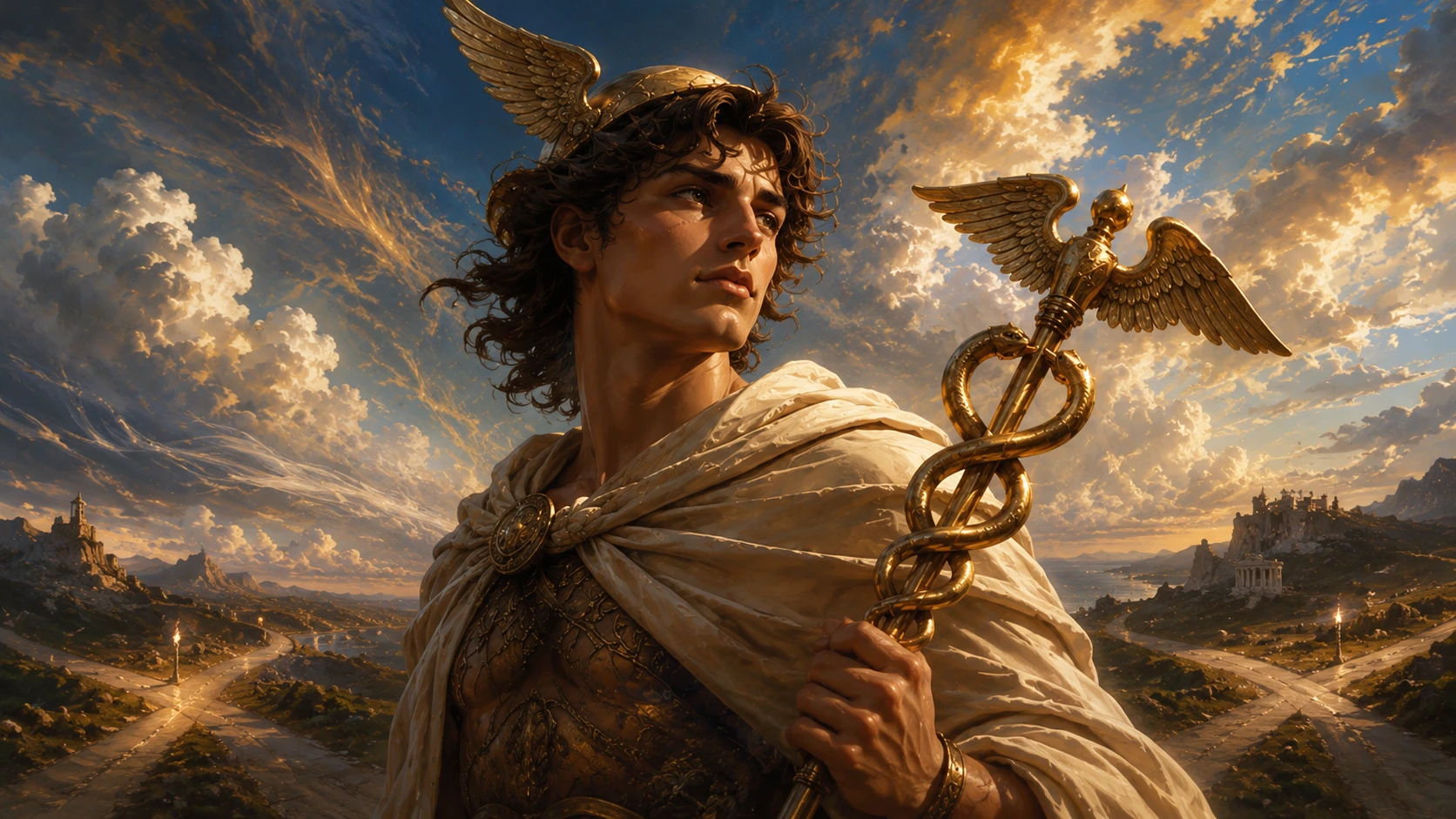
In Hesiod, Hecate holds an exalted position: Zeus respects her earlier privileges. She is not simply a dark goddess, but a power honoured in heaven, on earth and at sea.
Other traditions associate her more closely with crossroads, ghosts, magic and the underworld. These developments help explain her nocturnal character and her place at boundaries.
Certain religious and poetic associations bring Hecate together with Artemis and Selene. The three figures then share lunar, nocturnal and protective aspects.
In the Homeric Hymn to Demeter, Hecate hears Persephone's cries and accompanies Demeter. She later becomes a companion of the queen of the underworld.
Offerings and images place Hecate at crossroads, places of choice and uncertainty. Here, myth meets ritual practice.
Hecate becomes a major figure in magical practices and the spaces between worlds. She brings together what the city tends to keep at its margins.
Perses and Asteria; Hecate's honours and spheres of influence. English translation: H. G. Evelyn-White, 1914. This reference supports those specific points.
Hecate hears Persephone, accompanies Demeter and later becomes the daughter's companion. English translation: H. G. Evelyn-White, 1914. This reference supports those specific points.
A specialist collection of ancient passages, genealogies, variants, iconography and references to source texts.
A French overview to use as a starting point for names, variants, cultural context and bibliography.
Explore related figures, places and stories. Pages available only in French are labelled.
Follow Hecate's part in Demeter's search.
Explore Perses and Asteria in the Greek family tree.
Hecate connects the underworld, magic, night and journeys between realms.
Her profile is especially useful alongside those of Demeter, Persephone, Hades and Hermes.