Old Norse name
Frigg
Norse goddess
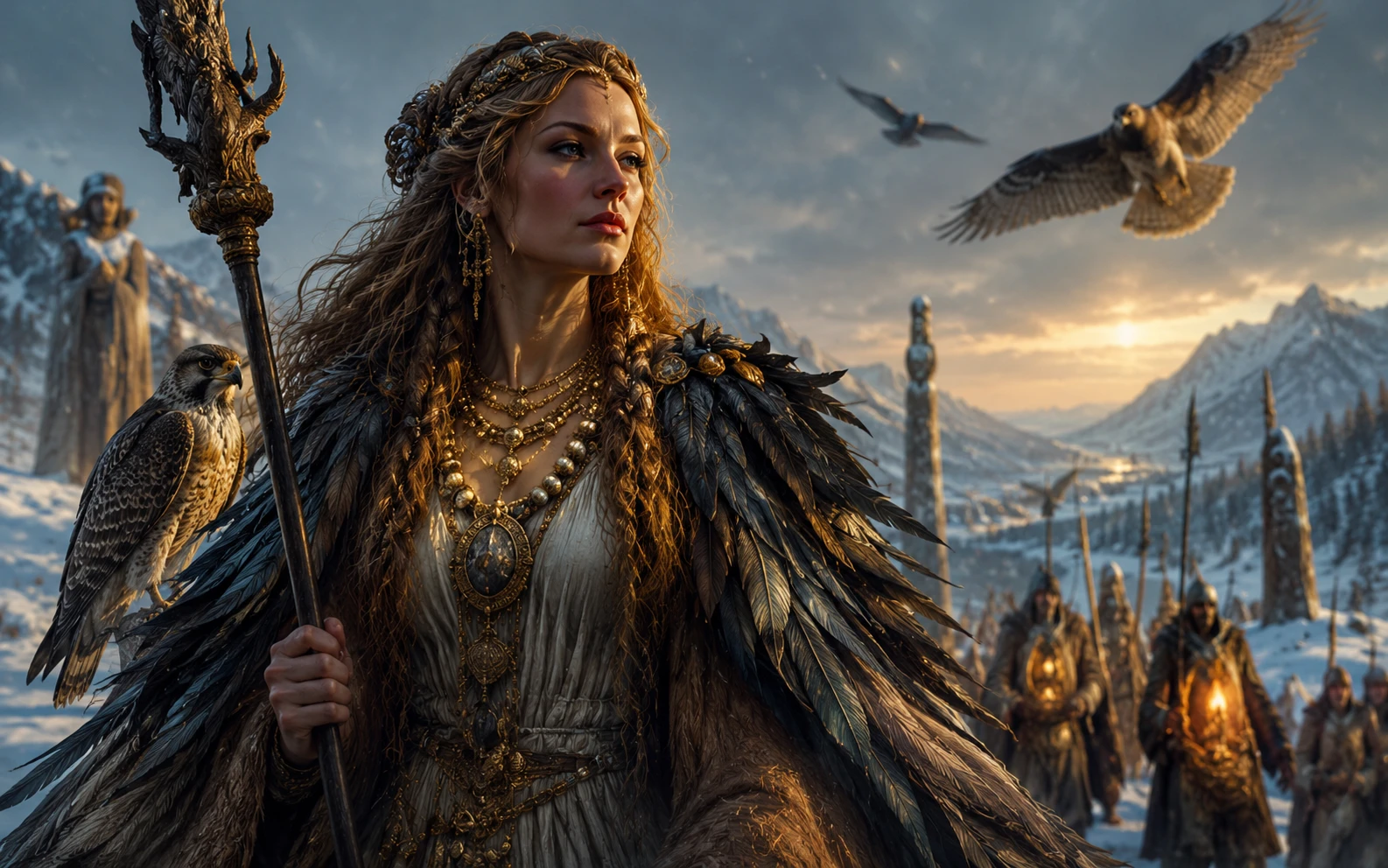
Frigg is Odin’s wife and Baldr’s mother in the Eddic sources. Snorri places her first among the Asynjur and assigns her the dwelling Fensalir, but the surviving texts chiefly describe her words, her knowledge and her desperate efforts to protect and then recover her son.
The evidence is more limited than some modern overviews suggest. This profile therefore follows the roles and episodes found in the sources, without automatically assigning her every aspect of marriage, motherhood or spinning.
Gylfaginning presents Frigg as foremost among the goddesses of the Æsir and places her dwelling at Fensalir. Skáldskaparmál identifies her through her relationships: wife of Odin, mother of Baldr, mistress of Fulla and lady of Fensalir.
These descriptions establish her rank but do not provide a precise catalogue of powers. It is therefore better to speak of her sovereignty and place in the divine family than to assign her rigid modern categories of divine responsibility.
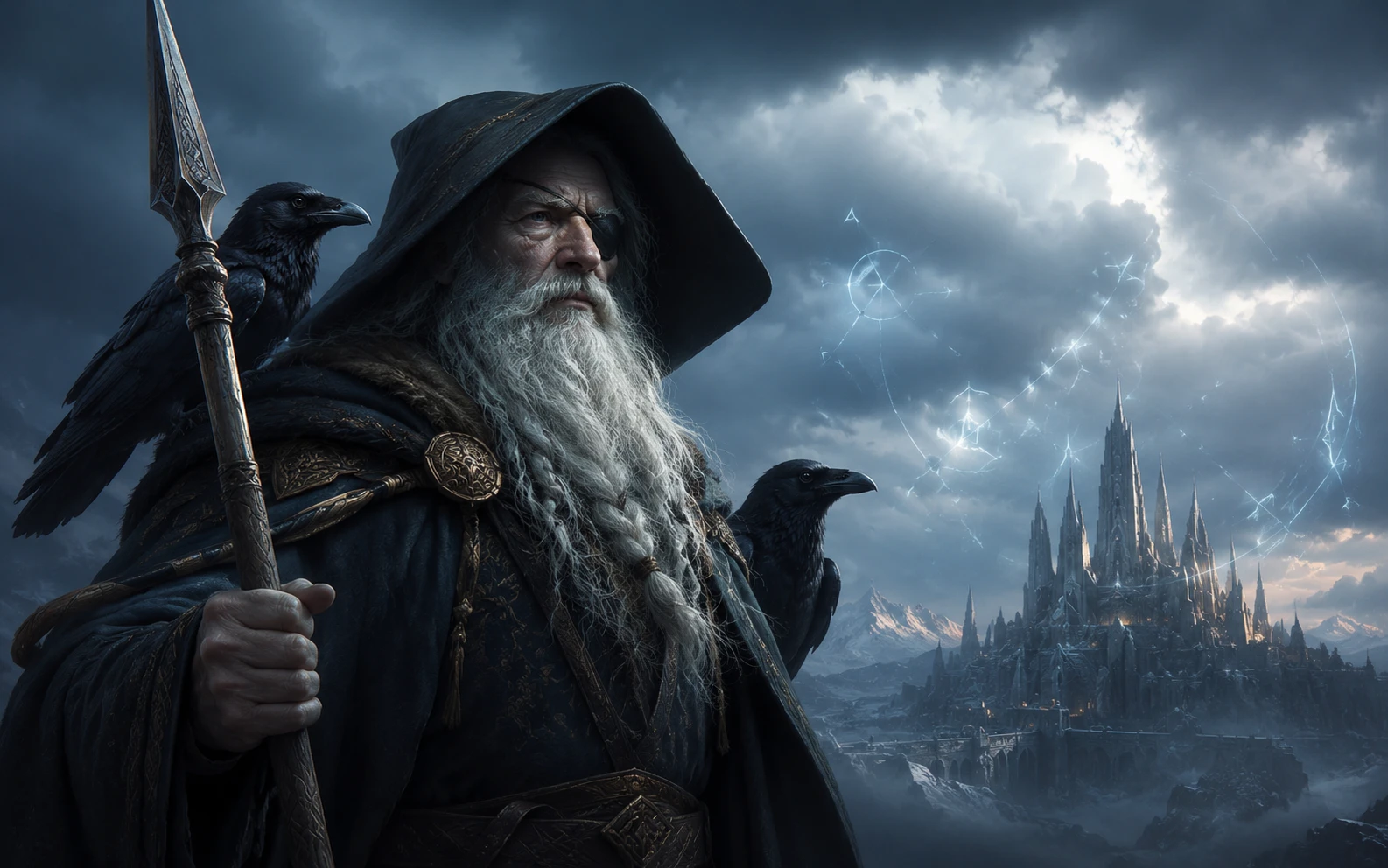
Vafþrúðnismál opens with an exchange between Odin and Frigg. The god wants to challenge the giant Vafþrúðnir to a contest of knowledge. Frigg tries to dissuade him, considering the giant extremely powerful, then wishes him a safe journey when he holds to his decision.
The scene gives her an advisory voice that is neither ornamental nor submissive. Frigg assesses the danger, expresses disagreement and then supports Odin’s choice, without the poem reducing their exchange to an abstract marital role.
In Lokasenna, Freyja says that Frigg knows everyone’s fate but does not reveal it. This is a brief poetic statement, not a description of a method of divination or an unlimited power.
It nevertheless helps explain the restraint associated with Frigg. Her knowledge removes neither the risk Odin takes nor Baldr’s death. Knowing what will happen and being able to prevent it are not the same in the Norse world.
In Gylfaginning, Frigg makes many things swear not to harm Baldr. Mistletoe remains outside this protection because she considers it too young to be asked.
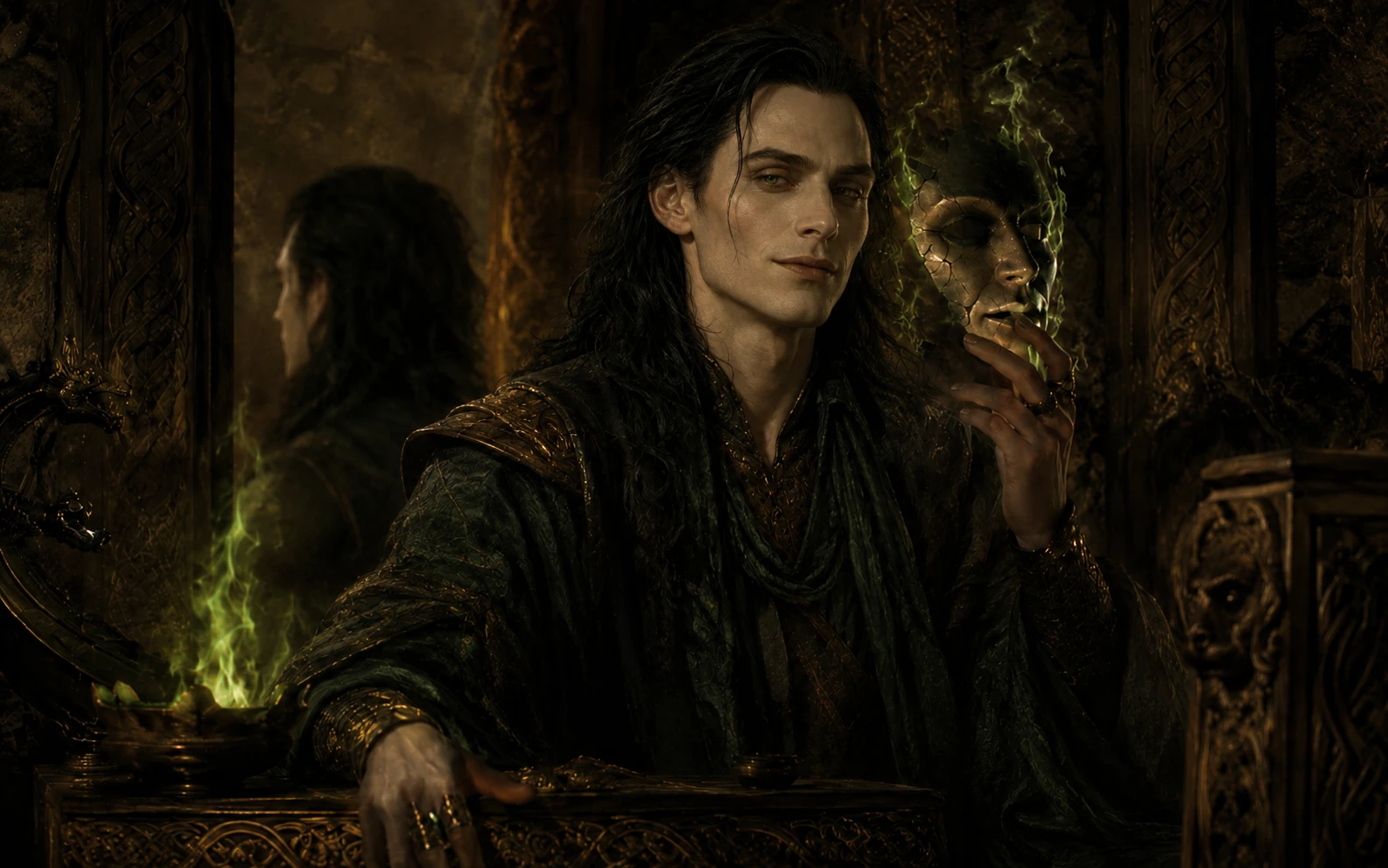
Loki visits Fensalir disguised as a woman and learns of this exception during their conversation. The episode makes Frigg the organiser of an almost complete protection, but also the unwitting source of the information Loki exploits.
Völuspá places Frigg’s mourning at Fensalir after Baldr’s death. In Snorri’s account she does more than lament: she promises her love and favour to anyone willing to ride to Hel and offer a ransom.
Hermóðr undertakes the mission. When Baldr and Nanna give him presents to take back, Nanna sends Frigg a linen cloth among her gifts. The story thus preserves family ties even in the realm of the dead.
Frigg and Freyja are separate figures in the Eddas: one is Odin’s wife and Baldr’s mother; the other belongs to the Vanir, owns Brísingamen and receives a share of the dead at Fólkvangr.
Their names, some of their roles and comparative religious history have prompted scholarly comparisons. Those debates are legitimate, but do not justify merging their stories in an encyclopaedia profile.


The surviving sources do not justify presenting every domestic, maternal or marital activity as an exclusive attribute of Frigg.
Linguistic or historical comparisons do not erase the clear narrative distinction between the two goddesses in medieval texts.
Frigg warns Odin of the danger posed by the giant, then wishes him a safe return.
She obtains promises from many things not to harm Baldr, with mistletoe as the exception.
Loki, in disguise, learns from Frigg that mistletoe has sworn no oath.
After Baldr’s death, Frigg seeks a volunteer to negotiate his return with Hel.
Frigg’s portrait, the oaths and Baldr’s death. English translation: Arthur Gilchrist Brodeur, 1916. This reference supports these specific points.
Frigg and Odin as Baldr’s parents. English translation: Arthur Gilchrist Brodeur, 1916. This reference supports these specific points.
Knowledge of fates and the exchange about Baldr. English translation: Henry Adams Bellows, 1923 (numbering from this edition). This reference supports these specific points.
Explore related figures, places and stories. Pages available only in French are labelled.
Explore the realm of the Æsir and the setting of Frigg’s efforts to protect Baldr.
Find her relationship with Odin and Baldr in the Norse family tree.
Frigg acts, advises and tries to protect, but the texts do not give her the power to undo fate. Her rank emerges through her closeness to Odin, her words and the actions she sets in motion around Baldr.
This limit gives the figure her power: deep knowledge does not prevent loss, and an almost universal protection can still fail because of a single exception.